Showing posts with label chiropractic. Show all posts

Tuesday, March 4, 2014

My Take on "Chiropractic Mission" Trips

This post may end up being slightly controversial but it's a subject that is dear to me.  As you know by now, my passion lies within serving the international community so one may automatically assume I'm a fan of chiropractic mission trips? Right? Well... you'd be wrong.

For those of you who do not know what I'm referring to, chiropractic mission trips are trips that are focused on traveling somewhere and adjusting/treating the masses gratis.  The idea behind these, I do support however it is how they are organized, who they are marketed to and the service/disservice that they do, is what forms my opinions.

Throughout my chiropractic education, I've heard tens of stories from students who have gone on these trips. These are my conclusions:

1.  They are not recruited out of a mindset of service but out of a want to travel and experience culture.
2.  No adjusting skills are necessary "we'll teach it to you".
3.  They serve one area for a day or two and no one will ever return to continue care.
4.  The companies who coordinate these trips, make money out of exploiting students.

The students who come back from these trips regale in their long days, adjusting hundreds of people and the boost in their adjusting skills.  Which is fine, they are utterly excited about their experiences and FINALLY feel ready to enter clinic.  But I ask you, why aren't these students focused on honing their craft with their peers and professors? Why do they feel the need to "practice" on unknowing people in an exotic location somewhere?  I believe this misstep to be unprofessional and borderline dangerous.

This?
Or this?

The key is that these students feel theses trips makeup in what they think their institution lacks.  Heck, if you put in front of me the options to go to Peru or to sit in a lab for hours, weeks, months, years to perfect my art.  I'd probably choose Peru too! But what about all of the things you learn from being in the lab for hours? Perseverance, Collaboration, Hard Work, Dedication? Why are we short changing ourselves?

In the mission trip option instance, the patient is the last thing they are considering.  In our field, the patient comes first! To be a successful healthcare practitioner, this is how your mindset must be.  Why aren't we of that mindset when we first step foot into our educational career?  I'm not sure.  Some will argue that being adjusted once is better than never being adjusted at all.  I think that's cruel!  These patients experience a glimpse of hope, perhaps pain-free movement for the first time in Lord knows how long and then you're just going to leave?

IF a "Chiropractic Mission Trip" is a must then at least do it in an area where you can refer them to an office.  Or better yet, GO SERVE THE INTERNATIONAL COMMUNITY and actually make a difference!  Set up a clinic and make cultural impact, don't drop in for a few days just so you can have a resume booster.  It's irresponsible and unprofessional. Rant over.

Cancer: Everything Happens for a Reason

I've had this particular entry sitting in my drafts for several years now, I think it's time that I publish it (unedited from it's original draft form).

For the first time in quite a while, I am at a loss for words on how to start writing this blog. Let me start by saying that I wake up every morning for my patients. I love each and every one of them dearly and strive every day to make their lives better, they have all become like family to me now whether that's because I'm young and naive or it's a normal feeling that doctors have for their patients, I'm not sure.

This week has opened my eyes up to a grander plan, allowing me to share this once in a lifetime case with you.

A 72 year old female presented to clinic the day after Thanksgiving (I'll never forget the day, I had complained about having the Black Friday shift for weeks, my family came out to Missouri to bring Thanksgiving to me since I would have missed it otherwise). She came in alongside her husband after taking several months off from care. She had no major complaints, just knew that she could use an adjustment. She is in perfect health EXCEPT for the fibrosarcoma on her right distal humerus (arm just above the elbow). Her soft-tissue fibrosarcoma (meaning within the muscles and fascia instead of within the bone) was about half as long as her humerus and protruded about 2-3 inches from her arm. It was an inflammed, heat-generating mass that ulcerated. Being that I'm well on my way to becoming a chiropractor, this was the case of a lifetime, how often are these seen in practice? Hardly ever. I worked her up and she come in every other week for about a month until she started having horrendous low back pain of insidious (unknown) onset. Radiographs were instantly obtained to r/o (rule out) metastasis. The radiographs suggested osteolytic (bone-destructing) lesion in her sacrum.... which means metastasis from the fibrosarcoma in her arm to the sacrum because as we all know, there are types of cancers that spread. Unfortunately, this patient passed away before I could inform her of this new progression...

There will be Doctors of Chiropractic that will tell you outlandish claims in regards to healing cancer.  My friends, colleagues and readers I offer you this:  It is not our place, as the health care practitioner to make these claims (whether we believe them or not), it is our job to facilitate the health of these patients whether it's only pain management or not.  The outpouring of love I was received at her funeral was unreal.  As a student, I felt completely inadequate while overseeing her care, she apparently felt otherwise.

Friday, May 3, 2013

Changes

     It seems to have been ages since I've posted last and so much has changed!  Where do I even begin?  Firstly, I want to thank those of you who read this blog, I've been lucky enough to have students in passing thank me for helping them with their radiology exams and emails from practicing Doctors of Chiropractic.  I'm in awe of my readers, and it humbles me.
     Secondly, CHANGES!  Magnificent changes!  My motto in life, like many others, is that everything happens for a reason.  I've been at Life University in Marietta, GA since the Fall of 2011 enduring a transfer process that has not the easiest, albeit worthwhile.  Something that has not, and will not change, is my passion for Chiropractic on the global scale.
     Since I've posted last, I've been blessed enough to be able to travel to Perth, Australia and Durban, South Africa to the Annual General Meetings for the World Congress of Chiropractic Students, a student run corporation that I am innately passionate about.  Please visit our website and check it out: www.wccsworldwide.org If you have any questions about this phenomenal, on-point, organization please email me! In Durban, my peers elected me onto the Board of Directors and I could NOT be more excited to continue serving our membership in such a capacity!
      I vow to focus on this blog again, as time allows.  Keep focused and stay passionate!

Thursday, May 19, 2011

Props to Chiropractors and Ground-breaking research!

I just want to take the time and dedicate this blog to a former prosector and chiropractic colleague of mine, Dr. Frank Scali and his team for their ground-breaking research that discovered an anatomical connection between the rectus capitis posterior major muscle and the dura mater.


Let me first explain the anatomy behind this research. The rectus capitis posterior major muscle (RCPM for short) is a muscle located in the occipital triangle or at the base of your skull at the top of your neck (see picture). The action of the RCPM muscle is to extend the head (like your looking up at the ceiling) and to rotate the head at one of the superior-most joints of the neck: the atlanto-occipital joint.


The dura mater that this muscle has been found to be connected to is a layer of what is called the meninges. The meninges are known as the coverings for the central nervous system aka the brain and spinal cord, and are made up of 3 layers: the dura mater, the arachnoid mater (named for it's web-like connections to it's adjacent meninges layers) and the pia mater that is directly attached to both the brain and spinal cord (see picture). The dura mater is aptly named because of it's toughness and the need to cut through this layer in order to visualize the contents below.


Now that, hopefully, everyone understands the anatomy let me move on to the significance of this discovery, if you haven't already put two and two together. The connection between the RCPM muscle and dura mater is EXTREMELY signifigant. If the RCPM muscle is in spasm, like it usually is in those with tension headaches, it will pull on the dura mater directly effecting the nervous system! Of course, further research needs to be provoked from this study on how much tension, etc is placed and how much muscle contraction is needed to add tension, etc but this anatomical discovery is astonishing and adds to the great body of knowledge and to the future of research.

Sunday, May 1, 2011

Lumbar Disc Injuries

Low back pain is the number one condition treated by chiropractors with lumbar disc injuries leading the differential diagnosis categories for each low back pain patient. Let's first discuss the lumbar spine and it's anatomical details.

The lumbar spine is referred to by the non-medically minded as the low back or the small of your back. The lumbar spine is composed of five vertebrae that when properly aligned form a lordosis or inward curvature. Between each of these vertebrae lie a disc or more properly named an intervertebral disc (IVD). The IVD is made up of two components: the annulus fibrosis and the nucleus pulposus, better described as a jelly doughnut. The jelly in the middle of the doughnut represents the nucleus pulposis which is held in place by the actual doughnut or the annulus fibrosis. The nerves that supply the buttock and entire lower extremity do exit the lumbar spine and are often effected by disc injuries.

There are multiple types of disc injuries: discitis, disc herniation, disc bulges, disc fragmentation/sequestration, disc degeneration, etc. What I'm going to focus on in this blog are the disc bulges and herniations. Symptomatology for these two conditions can be identical in the form of radiating or traveling pain from the lumbar spine to either the buttock, the posterior thigh, the posterior knee, the plantar or bottom of the foot or as far as to the big toe. The causation of this pain pattern is determined by the level of IVD bulge or herniation and it's effect on the correlated nerve exiting at that level (see diagram, nerves are in yellow). Disc injuries can also be asymptomatic or cause little to no pain at all.

Mechanisms of injury can include but are certainly NOT limited to: poor lifting posture, sudden rotational moves, over-use injuries, poor lumbar spine biomechanics/support or can be as simple as bending over and picking up the newspaper. Diagnosis for these problems are often quick and are made through orthopedic testing, radiographs (although the IVD cannot be visualized on xray, the space where the disc lies is), and MRI. MRI is usually the "gold-standard" diagnostic imaging preferred for disc injuries as visualization of the lumbar spine osseous structures (the bones) PLUS the IVDs AND the nerves are all possible.

Treatment options are vast from conservative options ie. chiropractic care via spinal adjustments and therapeutic modalities to radical surgical procedures that can involve removing the disc and fusing the two adjacent vertebral bodies together or an insertion of a disc prosthesis.

For research and more information on what chiropractic can do for disc herniations and injuries see the following research:
http://www.ncbi.nlm.nih.gov/pubmed/8976479
http://journals.lww.com/joem/Abstract/1991/08000/Cost_per_Case_Comparison_of_Back_Injury_Claims_of.8.aspx

Friday, April 8, 2011

Autism & Chiropractic


"Autism is a developmental disorder that appears in the first three years of life, and affects the brain's normal development of social and communication skills."

A.D.A.M.


As part of my second clinical nutrition class, I, along with a select few of my classmates, decided to do our term presentation over autism. As a part of our project, we put together a blog so that our information will be put out on the web. The blog does focus more on the CAM or complementary and alternative medicinal approach to treating autism but does offer both treatment paradigms.

There are many different theories on how autism occurs in a child and they range from genetics, diet, vaccine-induced, tylenol-induced, etc. But what it boils down to is how to treat these children. Chiropractic care has been proven to be an effective treatment, post-adjustment many autistic children are able to focus better, have better eye contact, hand figitting stops and their social skills improve greatly. (Improvement in Autism in a Child Coupled with Reduction in Vertebral Subluxations: A Case Study & Selective Review of the Literature Journal of Pediatric, Maternal & Family Health - Chiropractic ~ Volume 2010 ~ Issue 3 ~ Pages 107 -115 and Improvement in a 3½-year-old autistic child following chiropractic intervention to reduce vertebral subluxation [case report]; J Vert Sublux Res. 2008 ;APR(7):Online access only pp. 1-4)


Spinal adjustments are not the only way that Doctors of Chiropractic address autistic children, dietary and nutritional supports are a MUST. I highly recommend that you visit autismandcam.blogspot.com for more information on all of this, there are GREAT research articles, sources and videos for your educational pleasure.


The month of April is dedicated to Autism Awareness, please educate yourself and earn some compassion for those that you do not understand.


Saturday, January 1, 2011

New Year, New You?

Happy New Year! Felice Anno Nuovo! Gelukkige Nuwe Jaar! Guten Rutsch! In whichever language is your choice :)

January 1st is infamous for "resolutions" ... resolutions that the majority of the global populous dedicate to changing their health whether it be the simple task of drinking one more bottle of water a month or as complex (or crazy) as losing 100 pounds in 100 days. The majority of these resolutions are not kept for the following reasons: not appropriate for what their body needs, do not have the entire educatory capacity to implement a system that is long lasting and forever, chosen a fad diet/crash diet plan, or have simply jumped into the system of their choosing head first.

We are living in country who's current culture is based upon getting what we want, when we want it and how we want it and most of the time we want it now. Sorry Charlie, that's not going to work when wanting to give yourself a full-body health make over. Think about those who have successfully quited smoking. They weren't the ones who have quit cold-turkey, shocking the body into a nicotine-craving pile of cells, they are the people who dedicated themselves to the hard work and long-time dedication to dropping the habit.

Yes, most of you know that exercise and diet are key to making changes but these aren't the only no-brainer options. The key to a total body makeover is to have 100% health in each of these aspects: Emotions, Biomechanics (Physical), Nutrition. So, let me expand my thoughts.

Contrary to how you've been raised, health is not based upon how YOU feel but upon how your body functions in response to stresses. You may feel fine but your body could be craving something that you're not giving it. The body is an amazingly adaptive machine, the most efficient machine in the world. The body makes adaptations before it sends signals to you in the form of symptoms. The more adaptations your body makes, the further from health it is becoming. In order to regain your health, you must have the aforementioned three areas in the forefront of your mind.

Emotional Health: Your thoughts are controlled by your brain, and your brain runs your body. Control your thoughts and you control your body. That's not to say throw emotions to the trash, it's to say that what and how you think determines what and how your body acts.

Nutritional Health: Many think this is as simple as picking up the next Men's or Women's Health magazine and implementing whatever those nutritionists think into your own daily living, they are experts after all right? Well yes, but they aren't sitting infront of YOU, examining YOU and YOUR body, everyone's bodies are different. I would strongly encourage you to consult a nutrition specialist prior to any health-changing initiatives.

Biomechanic/Physical Health: This is where you can incorporate your exercise routine of choice but this area encompasses so much more! Think of your physical health as a circle. The circle represents your daily movements, such as walking, hugging someone, bending over to pick something up, etc. But what is a circle made up of? Smaller arcs, without these smaller arcs the circle wouldn't exist. The smaller arcs are representative of many things, the bending of your knees while you walk combined with the rotation of your pelvis at the same time, the compensation in your back as you bend over... etc. These smaller arcs have to working and coordinating perfectly for your larger movements to be effective and dare I say it, pain-free. These smaller arcs of movement are the specialty of yes, you've guessed it, your local chiropractor. (No, this whole article is not to solicit your business, promise.)

Now that you know how you can have that brand new you in the brand new year, you must also understand that time is a major factor. Determination and dedication are key! Remember: If it's easy, it's not worth doing :)

Best of luck!

Thursday, November 11, 2010

The Future of Chiropractic?

I have decided to share my opinions with you tonight. After two wonderful speakers came into class today to discuss a complementary and alternative health department (that is administered by a Doctor of Chiropractic) in a local hospital, it led me to think about what the future of the chiropractic professional holds. There are several views and paradigms ranging from the strict upper cervical/neuro"philosophy" clinics (aptly named "Old School Docs" by the newer chiropractic generation) to those that I have previously mentioned who have integrated themselves into a hospital setting.

Patient care is number one. This is the general rule for every health care practitioner, whether it is a DPT (Doctor of Physical Therapy), Cardiothoracic Surgeon, or a homeopathic nurse, everyone unites under their concern for patient care. So explain to me, how or why wouldn't chiropractic want to jump on board? I cannot think of a single reason. Integrative medicine needs to become "good medicine" where the integrative approach is what is naturally and automatically implemented. There is a time and place for EVERY health care practitioner. I, as a soon-to-be Doctor of Chiropractic, will never claim to cure cancer, fix your cavities or even reverse your arthritis, I will, however, promise that I will serve you to the best of my abilities and give you and your needs the best clinical experience that I could possibly give, I refuse to let my ego get in the way of your care.

Chiropractic education has made dramatic leaps since the initial program implementations (Thanks Wilk! See previous posting about education hours, etc) and those who choose to embrace the general practitioner/primary care physician model are on the cutting edge of moving this profession to where it needs to be. At a recent graduation at my college, David Chapman-Smith (the secretary-general for the World Federation of Chiropractic) was quoted as saying the future of chiropractic lays within integration into sports rehabilitation and injury care, and I could not have said it better. Integration is key but not just in that one aspect. Sports injury care and on site evaluations will give chiropractic the leap forward that is needs. Luckily, I have been able to travel to a division 1 school to treat starting offensive linemen prior to games on several occasions but anyway...

These are what recent graduates are striving for every day: integrative practices, positively promoting chiropractic care, staying current on the neurological advances in why chiropractic works and what else we can do, staying current on research, and complete removal of the negative conceptions about chiropractic from skeptical minds.

Lack of compliance hinders progress. Ask questions! Be active in your health! Challenge your doctors, it will not only make them a better doctor but it will also make you more responsible for what's going on in your health!

Wednesday, November 10, 2010

Radiology #5 Synovial Chondromatosis

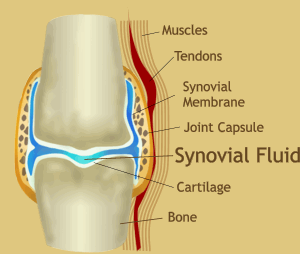
It has been quite awhile since I have updated my blog, so as I am sitting in clinic in between patient visits, I think I will take some time to educate the masses! This radiology blog will be about Synovial Chondromatosis also known as Synoviochondrometaplasia. Let's start out by explaining the joint capsule. Almost every joint in the body has a surrounding capsule. This capsule is lined with synovial tissue which secretes synovial fluid (lubrication for your joints, basically). Synovial chondrometaplasia is a condition in which there is proliferation of the synovial lining. The synovial lining proliferation can then calcify and break off, leaving a loose body (note: see arrows in the elbow radiograph) in the joint capsule.


There are two forms of synovial chondrometaplasia: primary and secondary. Primary synovial chondrometaplasia has no known onset or causation while the secondary form is usually due to increased joint stress or previous onset of osteoarthritis. Not only are there two forms, but there is a separate classification for how involved the joint capsule is, which correlates to the surgical treatment. Surgical treatment can range from a simple loose body removal or a complete synovectomy where the synovial lining is removed. Chiropractic management includes ultrasound and joint mobilization that can involve adjustments.

Sunday, July 4, 2010

Minimal Educational Requirements

Comparison of the Education of DCs and MDs
Both chiropractic and medical schools require certain course work for admission. These vary from school to school. Very few schools of either type require a bachelor's degree, although some specify that they prefer the applicant have such a degree.
Chiropractic colleges do not require the MCAT. Some medical schools do. Contrary to common belief, some medical schools (including high profile institutions) require the bare minimum of undergraduate requirements.
We took the admission requirements for medical schools from the publication titled: Medical School Admission Requirements, 1997-1998: United States and Canada, 47th edition (published by The Association of American Medical Colleges). Admission requirements for accredited chiropractic schools are dictated by the Council on Chiropractic Colleges (the agency appointed by the U.S. Dept. of Education to accredit chiropractic colleges).
The Parker College study reported that on average, chiropractic college involves 372 more classroom hours than medical school. Chiropractic students also have more hours of training in anatomy, physiology, diagnosis, and orthopedics (the musculoskeletal system).
It should be apparent from looking at the data below that in general, the chiropractic student has a more extensive classroom education and practical training in these areas, particularly in diagnosis, than the medical student.
Requirements for Admission to
Chiropractic and Medical Schools
College Courses
Parker Chiropractic College Harvard Medical School Stanford University
Biological Science (with lab) 1 year 1 year 1 year
General or Inorganic Chemistry 1 year 1 year 1 year
Organic Chemistry (with lab) 1 year 1 year 1 year
Physics (with lab) 1 year 1 year 1 year
English or Communicative Skills 1 year
Psychology 1/2 year
Humanities or Social Sciences 22.5 quarter hours
Electives 6-to-18 quarter hours.
Degree Requirements
These basic educational requirements for graduates of both chiropractic and medical schools show that although each has its own specialties, the hours of classroom instruction are about the same. (The class hours for basic science comparisons were compiled and averaged following a review of curricula of 18 chiropractic colleges and 22 medical schools.)
Minimum Required Hours
Chiropractic College Medical School
456 Anatomy/Embryology. 215
243 Physiology 174
296 Pathology 507
161 Chemistry/Biochemistry 100
145 Microbiology 145
408 Diagnosis 113
149 Neurology 171
56 Psychology/Psychiatry 323
66 Obstetrics & Gynecology 284
271 X-ray 13
168 Orthopedics 2
2,419 Total Hours for Degree 2,047

Friday, July 2, 2010

Radiology #4 Osteoarthritis

As I'm stuck in town for the holiday three day weekend so I can study for my upcoming diagnostic imaging III midterm, I decided to post about a topic that I'm going to be tested over. Let's first start off talking about arthritis. Everyone has seen the tylenol commercials for "joint pain" with the geriatric patients walking around holding their backs, necks, hand, etc anything to make the public sympathetic to a condition that they are already forming. Arthritis is defined as the inflammation of one or more joints which results in pain, stiffness and limited movement. There are over 100 different types of arthritis but today we will be focusing on osteoarthritis (OA) or as it's also known as degenerative joint disease. OA is the most common joint disorder, and it's not surprising because most injury sites, such as the fractures previously blogged about, will eventually turn into OA because they weren't properly rehabbed, patients didn't comply with doctor's orders, or simply from overuse. OA occurs when the cartilage lining the joints wears down, causing more stress on the bones in the joint. It's radiographically found as joint space narrowing with an increase in the cortical margins of the bones also known as subchondral sclerosis. Note the difference between the normal (top) knee radiograph and the one demonstrating OA (bottom). Medical treatment includes pain relievers and physical therapy. Chiropractic treatment includes adjusting to restore motion into the joint that has lost it's motion, physical therapy to rehab the surrounding musculature and ligaments and nutritional counseling, where applicable.

Thursday, July 1, 2010

Case #1 Inversion Ankle Sprain Injury

In an attempt to become more of an educator and less of an informative know-it-all, let me first start off this blog by talking about motion. Every joint in the human body has some sort of motion, whether it's pretending you can fly with your arms or tucking them under your pillow when you sleep. Many health care practitioners, including chiropractors, will, when a joint is injured or as a daily objective test will put a joint through it's entire range of motion. When the patient does this by themselves, it is known as active ranges of motion or AROM. Another test for ranges of motion include the patient relaxing the joint and letting the practitioner take the joint through it's motion, this is called passive ranges of motion or PROM (or as I tell my patients, I'm going to take you to your prom now!). If pain is provoked during PROM, this indicates ligamentous injury. (Ligaments attach bone to bone). The final range of motion testing is called resisted ranges of motion or RROM, where the practitioner will resist the patient as they actively put the joint in question through it's range of motion. If pain is provoked on RROM, the pain is due to muscular injury, as you are utilizing your muscles to resist the motion.

Onto the more interesting item at hand: Did you know that over 25,000 inversion ankle sprains are reported every day? Let me first define inversion ankle sprain. An inversion ankle sprain is when someone rolls their ankle in such a way that the bottom of their foot is facing the opposite foot or inward, compared to an eversion ankle sprain where the bottom of the foot is facing outward, away from the other foot. I currently have a young adult, male patient who came in with an extremely bruised and inflammed (swollen) left ankle. Mechanism of injury: he was playing lacrosse when he rolled his ankle via inversion and while rolling his ankle, he was pushed forward. After doing a thorough ankle regional examination, his PROM provoked pain which added a mark in my intial thought column of ligamentous injury (don't give me too much credit, it's how most inversion sprain injuries come out), orthopedic testing confirmed as well. If you will notice in the picture to the left of a normal ankle, there are three ligaments on the outside or lateral side of the ankle that attach the fibula (one of the lower leg long bones) to the ankle. The most common ligament to be injured is the anterior talofibular ligament (ATFL) which attaches the fibula to the talus, a tarsal bone that helps compose the ankle and ankle joint, as you can see there is a posterior one as well. Anterior and posterior refer to their location on the body, anterior basically means in front and posterior means in back. The second most common ligament to injure is the calcaneofibular ligament (CFL), which attaches the fibula to another tarsal bone in the foot, the calcaneus. The calcaneus is also the tarsal bone that makes up the heel of your foot. When inversion occurs in the ankle, the ligaments stretch out, this is clinically called a sprain. After taking my patient to the diagnostic ultrasound suite, my diagnoses had been confirmed. He had a grade 2 ATFL sprain and a grade 1 CFL sprain. Treatment for sprains include resting, icing, elevating, and compressing (RICE) the injuried area, usually via an ace bandage. We have been doing some cold laser therapy to the area which helps increase blood flow to the area which promotes a faster healing time, I'll post separately later about cold laser and it's clinical applications and research. We will eventually move to a more rehabilitative model to get his ankle back in shape, but as he has done this before, he will need to wear a brace or have his ankle taped every time he decides to participate in any sporting activity. Once ligaments are stretched out, it can take years (if ever) for them to return to normal size and shape.

Monday, June 28, 2010

Radiology #1 Scaphoid Bone Fracture

I have recently found a complete love for radiology! My college is lucky enough to have a brand new digital radiograph system, complete with a conference room where every day, almost all day long, the radiology interns and DACBRs (Doctors of Chiropractic who have a Diplomat from the American Chiropractic Board of Radiologists) read films, present case studies, etc. So from my love for that, not only will my radiology posts educate you, my reader, but will also affirm anything that I have learned, am learning or will learn. Since my cousin has a recent scaphoid bone fracture, I figured it would be the subject of my first radiographic post. The top radiograph (xray) shows normal anatomy of the wrist, and since the scaphoid is a carpal bone (one of the 8 small bones that makes up the wrist) a normal wrist radiograph is applicable. The pink dot is located adjacent to the scaphoid bone. You can clearly see the fracture in the next radiograph (note that these radiographs were taken on two different patients). Scaphoid fractures account for almost 71% of carpal fractures and are extremely unique due to it's vascularization. Usually a fracture of the scaphoid fracture will result in two pieces, like the one in this instance. The bone healing process is mainly dependent upon the blood supply (vascularity) because that's how nutrients arrive to the fracture site, hence healing. In the scaphoid, the blood supply is more proximal (closer to the wrist, farther from the fingers), so depending on where the fracture site is, the distal portion (the fracture piece closer to the fingers) may or may not get the nutrients that are vital to healing. Normal treatments include: casts over the wrist and may or may not include the thumb, surgical implementation of screws and bone grafts to adhere the fractured pieces together.

Sources:

Skeletal Trauma Radiology, University of Virginia. http://www.med-ed.virginia.edu/courses/rad/ext/

Boles, Carol. Wrist, Scaphoid Fractures and Complications. 22 March 2010; http://emedicine.medscape.com/article/397230-overview

Your Orthopedic Connection: Scaphoid Fractures of the Wrist May 2010. American Academy of Orthopedic Surgeons.

Hello Blogspot!


Chiropractic... what is chiropractic? As a politically active chiropractic student even I can say that this is controversial even withIN the profession. My definition of chiropractic is something that I have yet to completely compile, as it is constantly evolving. Chiropractors are the most qualified health care practitioners to take care of neuromusculoskeletal conditions, so yes this would be in my definition but chiropractic care is also applicable to ear infections, gastrointestinal problems, menstruation, etc the list goes on an on. I think everyone in the profession would agree that more research is needed but this thought also goes out to the pharmaceutical research. I would rather have quality research done at actual chiropractic colleges and from highly accredited medical colleges (example: Perceived benefit of Complementary and Alternative Medicine (CAM) for back pain: a national survey. Eisenberg, et al May 2010 JABFM) than studies that are FDA approved only because of the amount of money passing under the table. Chiropractic also falls under a wellness model of health care, and is actually the first profession (other than nutritionists) to fully integrate this into our treatment plans, philosophy and paradigms. If you think that you are 100% healthy because you have zero symptoms (whether it's pain, fever, headache, etc) then you are greatly mistaken.... but this is an entirely different topic altogether. So perhaps after this short discussion my definition of chiropractic thus far is that Chiropractic is a manual treatment therapy associated with treatment of the neuromusculoskeletal conditions and their somatovisceral correlations in the treatment of acute, chronic and wellness patients.